
Zoe have got a new 60-minute documentary out. I’ve watched it, so you don’t have to. Here is my review.
Why this documentary, why now?
If you’ve been following Zoe for a while you will know that they started out as a personalised nutrition company. For a fee, they would sequence your microbiome, measure your glucose and triglyceride responses to a standard meal, and from the results, give you dietary recommendations personalised to your own “unique biology”.
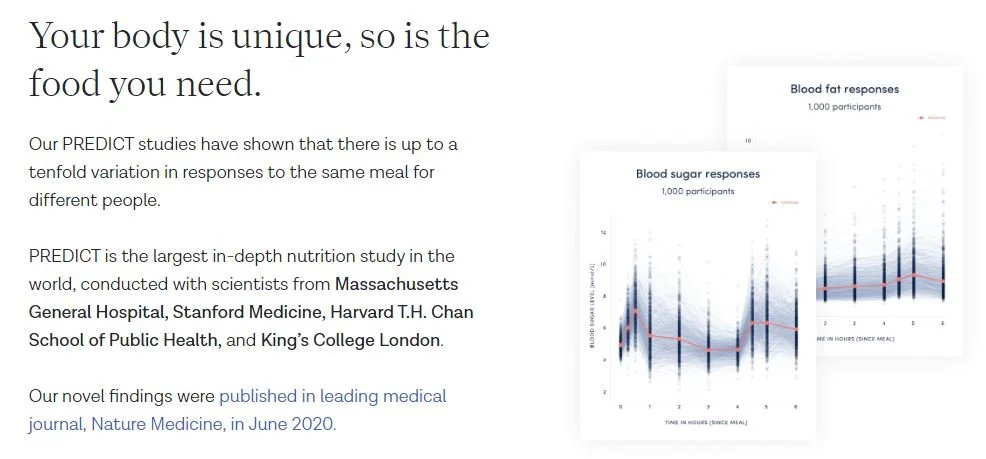
The old Zoe
Scientifically, this is basically bullshit hahaha. Now they seem to have quietly abandoned the “personalised to your own unique metabolism” and moved more towards being a “gut health” company, with multiple pronouncements about the microbiome being linked to every disease and symptom under the sun.
So this documentary feels like Zoe’s way of re-launching the “new” Zoe principles.
The Microbiome is The Essence of Health
Tim starts by saying “Gut health is the essence of our total health”. Is this true? The microbiome may be particularly important for gastrointestinal health (this is not my research area just FYI), but its role in overall health and metabolism is massively overhyped.
Because we have data that:
1) A fermented-food diet increases microbial diversity but doesn't change meaningful metabolic and clinical markers like glucose, insulin, LDL-cholesterol or blood pressure.
2) You can get lower LDL-C with sugar restriction with minimal impact on the gut microbiome.
3) You get multiple metabolic benefits from weight loss and exercise without changes in the microbiome.
The programme also tosses out statements like “the gut microbiome impacts CANCER and ALZHEIMERS” to really get your attention. To my knowledge this data is all associations - eg people with cognitive dysfunction have less gut microbial diversity, but as we all know correlation doesn’t mean causation.
Having a healthy diet, with plenty of fruits, veges, grains, nuts and seeds reduces the risk of multiple diseases, so noone is saying the gut definitely doesn’t play a role or that diet isn’t important. But in general they are really over-hyping the centrality of the gut microbiome.
Do Zoe sell a microbiome test? Why, yes they do.
Plant diversity
Next we get a segment of why getting 30 plant points per week is also “important”. Did you know Zoe sell a gut health supplement (Daily 30+) for £45 per month which provides just those 30 plant points you need? What, what? Grifters? How DARE YOU. These guys are scientists.
The 30 “plants” per week is not backed up by evidence at the present time. I’m not saying it’s a bad idea, but the data cited for why 30 “plant points” are important comes from the Gut Health Project, which is observational (points deducted), doesn’t measure proper clinical outcomes (more points deducted), and relies on self-reported dietary questionnaires (more points deducted) with pretty abysmal completion rates for the most important dietary data collection (even more points deducted).
It might seem obvious that the more plants the better, but actually prospective observational studies don’t suggest there is a massive difference in health when people get 9 fruits/veg per day instead of 5. (Most of the benefits come from getting 5).
There is a very cool trial starting soon, which hopefully will give us more insight into the role of plant diversity on gut and cardiometabolic health.
Most Brits do not even meet the target for 5 a day. So defo have a go at introducing more plants to your diet; add herbs and spices to meals to make them taste nice; and if more diversity results in better health, great.
And just FYI, Zoe do have some wonderful recipes of how to make delicious plant-based meals.
If you want to make your own seed mix, here’s a great 6 quid version from registered nutritionist Sophie Gastman.
The Menopause Grift
Now we have a section on the science Zoe has done on diet and the menopause. Guys, did you know they now have data on 100,000 women!!? The largest study in the world!
What data you ask?
They ask women what they eat; and they ask them what they feel, and then they make correlations between the two. Yes, CORRELATIONS. Again.
Why is this problematic? If you collect diet and symptom data (anxiety, depression, unmotivated, brain fog) at the same time, you cannot tell whether the poor diet is causing the symptoms; or whether the symptoms (feeling anxious, depressed, unmotivated, brain fog) are causing people to reach for unhealthy foods.
Ever felt pretty crap, exhausted, unmotivated and just got home and wanted an oven pizza and three chocolate souflees? Me too. Ever had those days where you’re feeling great, maybe you had a great day at work, an invigorating walk home in the sun, and thought to yourself “I’m feeling so good about myself I am going to make a health home-cooked meal”. Same.
The research Zoe are doing in the menopause is meaningless in helping us understand this relationship, and adds nothing practical to how diet affects menopause symptoms. You wouldn’t know that from how they hype up their “data” though.
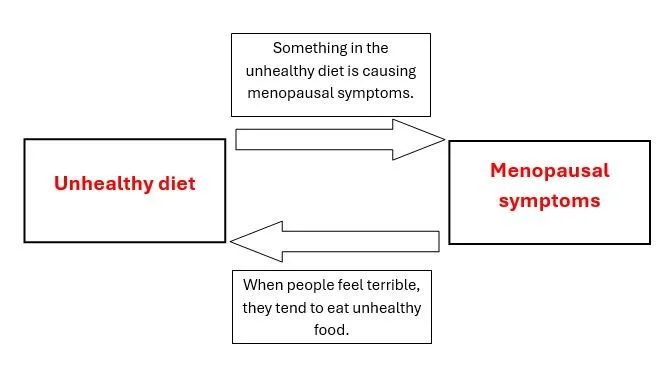
There is evidence that diet does affect mental health - including depression, anxiety etc. But in practice this just means eating less rubbish (sugary beverages; crisps) and adding more wholegrains, fruits, veges, nuts, seeds, and omega-3 rich foods might also play a particular role too. The Mediterranean diet does particularly well here.
There is also evidence that having a plant-predominant diet may help with some vasomotor-related symptoms of menopause (hot flushes etc). Having a more plant-predominant diet also helps with cardiovascular disease and overall health, so why not go for it. Does having your microbiome sequenced give you any special insight into this at the present time? No trial evidence supports this.
The Assessments
Zoe now no longer do any of the glucose or triglyceride testing as a part of their standard offer. They do some of the tests here in this programme (just to show improvements I presume), but seem to have dropped the whole idea of “glucose spikes”. I would like to claim 85% of the credit for this and would happily accept some kind of anti-influencer award haha.
I don’t know whether they do a fasting triglyceride or post-prandial triglyceride test in this programme, but a fasting triglyceride test is something you would get from your GP as part of a standard lipid panel. And, a standard clinical assessment or waist circumference, diet history and family history of CVD/type 2 diabetes would do a pretty good job at identifying metabolically healthy or not. Likewise, elevated CRP is closely correlated with the metabolic syndrome, and again it would usually be expected that a person with a large waist circumference would have elevated CRP.
Tim mentions that the Zoe programme reduces triglycerides. It’s true it did in their trial, but just decreasing your refined carb and sugar intake; increasing vegetables and high fibre foods like legumes and omega-3 foods like salmon will do this. Basically the dietary guidelines.
The Gut Score
Zoe’s gut scoring system has changed a lot over the years which reflects how much microbiome research is changing. Noone really knows what these scores mean. A recent study found that seven commercial direct-to-consumer gut microbiome tests gave substantially different results from the same stool sample. Science journalist and author Julia Belluz tested a number of commercial gut microbiome tests, which each promised to provide her with a list of foods “right” for her microbiome. They all recommended different foods. BAHAHA.
Here is a great article that goes into greater depth: Correlation Is Not Health. Why the ZOE “gut health” score is not what you think.
The Meal Score
Giving people feedback and nudges about what they’re eating can be a very powerful driver of behaviour change. All good nutrition apps have this in some shape or form.
It’s hard to know whether Zoe’s method of scoring foods and meals is reliable or not because they haven’t published anything about how their method. They have had some slightly dodgy views about nutrition previously (adding fat to carbs to “balance” blood sugars; crisps are fine as long as they don’t have additives; and their app previously recommended too little carbohydrate and protein intakes for people doing a considerable amount of exercise) so who knows.
But in any case, Zoe haven’t discovered anything new about nutrition. so hopefully people are just getting positive feedback for more legumes, fewer crisps etc.
How do you feel?
Zoe made a big deal about asking people how they feel and how most studies don’t do this. This is not quite true - many trials use validated questionnaires linked to wellbeing - including physical and mental.
However, the way Zoe interpret the “feelings” questions both in this programme and in their published trials is massively flawed. Whenever people receive attention, and are being listened to, they feel better. (Not a surprise!?). So in this programme, we have three people who have a team of very nice people from Zoe taking the time to listen to their struggles, barriers to healthy eating and personal goals. And this very nice team of people at Zoe have a new snazzy way of fixing all their problems with cutting edge science. Believing they are going to feel better…. makes people feel better!
At Oxford we did a blinded randomised trial testing a ketogenic diet against a control diet on symptoms of depression in people with treatment-resistant depression. One group got the keto diet; one group got a control diet which really didn’t make any meaningful changes to the diet, but we pretended it did (It was a made up diet called the “Phyto” diet). Both groups saw our very nice dietitian once a week. Look at what happened to symptoms of depression in the control diet (the blue line):
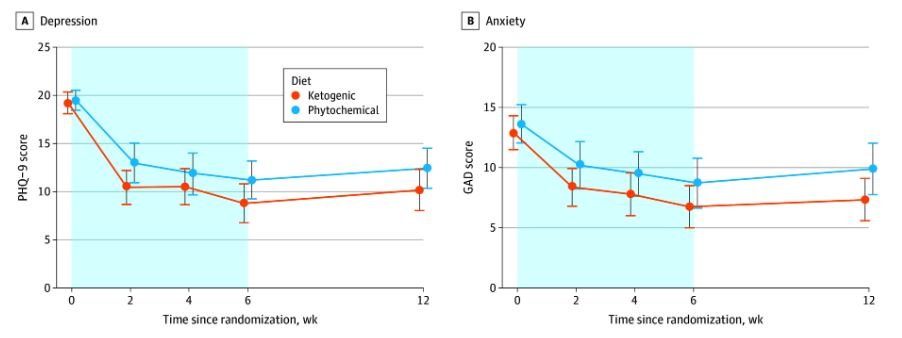
Gao M, Kirk M, Knight H, Lash E, Michalopoulou M, Guess N, Stevens R, Browning M, Weich S, Burnet PWJ, Jebb SA, Aveyard P. A Ketogenic Diet for Treatment-Resistant Depression: A Randomized Clinical Trial. JAMA Psychiatry. 2026 Apr 1;83(4):331-340. d
BOOM! Simply seeing a nice person who listens to them, and following a diet they believe will make them feel better….makes them feel better! In two weeks!
This is very, very poor science here by Zoe. They appear to not understand the Hawthorne effect, the placebo effect and expectation of efficacy, all things one would expect to learn in the first year of their PhD.
Tools to help people navigate an unhealthy food environment
This had the potential to be the best section. The participants talk about how hard it is to resist the convenient, palatable (and unhealthy) options on the high street, and overall food environment. Giving people real-time prompts to make healthy purchasing, meal planning decisions is probably the greatest strength of digital apps.
It all goes wrong though when Zoe introduce their app which is used to “analyse” a plant-based sliced cheese product, and the Zoe app says “enjoy in moderation”.
Here is the nutritional composition of the plant-based cheese product:
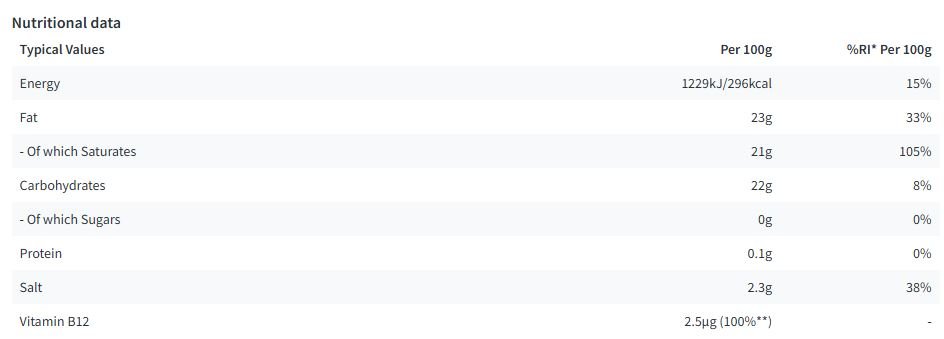
SWEET BABY JESUS THIS THING IS 70% FAT, AND 91% OF THE FAT IS SATURATED FAT.
Wait, lets’s look at the ingredients:

It’s modified starch and coconut oil. If there is a baaaaaaaad ultraprocessed food, this is it. This has no nutrition. No fibre, no bioactives, no protein, and the micronutrients come from fortification. Two slices of this take you up to 37% of recommended intake of saturated fat. Even worse, lots of people will be consuming this product instead of another filling in sandwiches, which would have some nutrition.
It’s comes up as a 47 score on the app, with “enjoy in moderation”.
My dear friends if you are vegan, and you want to have cheese, nut cheeses are way, way better. But regardless, this is definitely a “either avoid or keep to a minimum in your diet”. Not an “enjoy in moderation”. And the Zoe app saying it is a “medium” processing risk is absolutely bonkers……This is as processed and unhealthy as it gets.
They then introduce an olive oil spread which is described as not being health-promoting. The olive oil spread is predominantly unsaturated fat, and a 10g serving contains <1g saturated fat and 0.5g plant sterols. An intake of 1.5-2.4g plant sterols per day lowers LDL cholesterol by 7-10% in 2-3 weeks. Look the spread isn’t perfect (it has some coconut oil in) but the balance of fatty acids is reasonable, and the sterols are good. For the vast, vast majority of the UK population, this would be health promoting.
Now they have a harissa paste with the following ingredients: Rehydrated Paprika And Red Chilli Peppers, Rapeseed Oil, Sunflower Oil, Garlic, Salt, Chilli, Mixed Dried Spices, Rose Petals, Rose Flavouring, Lemon Juice, Natural Colour: Paprika Extract, Acidity Regulator: Citric Acid.
Beautiful. It’s spices, which Zoe love to tell us is good for our microbiomes, and some of the healthiest oils around: rapeseed and sunflower. As a rub, most people would be using about 5-10g of it per serving anyway, so a serving would only give about 0.2-0.4g salt.
The app gives it 50. THEY GAVE THE COCONUT OIL AND MODIFIED STARCH MONSTROSITY 47 POINTS. Enjoy both in moderation? What. I’d be happy to recommend someone use the harissa paste every day. The vegan cheese? Not so much.
Their processing tool has not been validated as far as I know, and wow, it shows. I wouldn’t recommend anyone use this if this is an indication of the guidance it gives.
The Big Reveal
The programme makes a lot of the fact that it would be amazing for health to change in 6 weeks. Here’s a post from Zoe announcing how terrifying it was that they were going to be recommending healthier diets to people alongside lots of moral and emotional support from very nice and supporting members of the Zoe team (and a television crew), and they had no idea if it would improve the way people felt or their clinical risk markers.
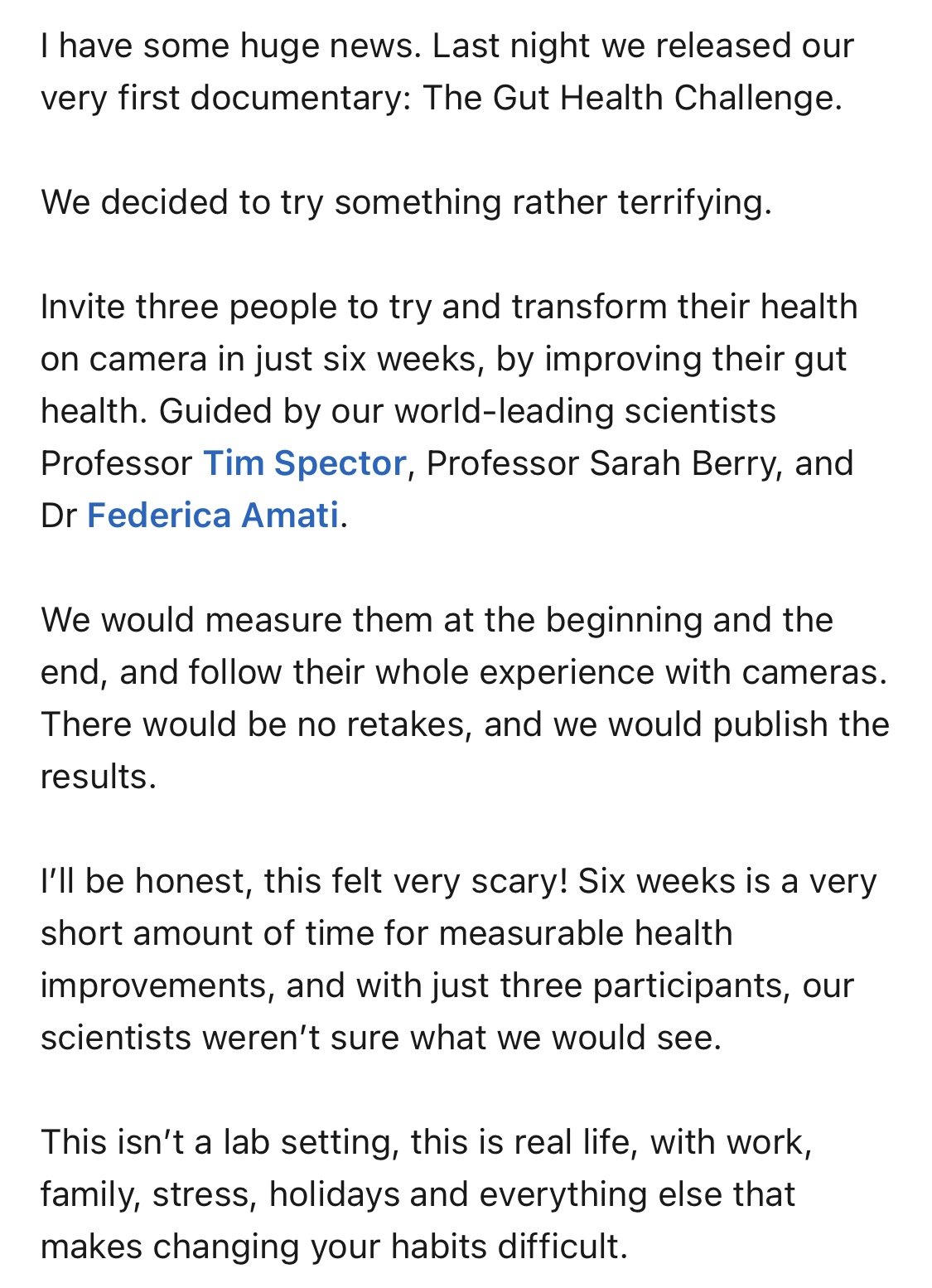
Diet changes the microbiome within a week; the Portfolio diet improves blood lipids in 2 weeks; and as we showed in our trial on depression; mood changes very quickly too, even with just emotional support.
Unsurprisingly, people felt better, and their blood markers were better; and their self-reported feelings were better.
Please know that this has nothing to do with microbiome testing or anything specific or unique Zoe are doing. This is simple the result of moving towards standard dietary recommendations alongside support to do so.
The Good
As a demonstration of how nutrition can affect multiple aspects of our health, this is a nice watch. It’s also great that they highlight how little fibre the UK (and most other populations) consumes. The absolute best thing about Zoe are the recipes. They have done an amazing job in highlighting what people can do with pulses like butter beans, lentils etc, and even have desserts which are pretty healthy too!
They also advocate an 80/20 approach, and highlight the importance of socialising - and enjoying yourself while doing so. This is a great message.
Conclusion
This is an advertisement which gives the impression that Zoe are doing something ground-breaking in nutrition. They’re not. They’re encouraging more fibre, and more plants which is fabulous, and it looks like many of the tools in the app can help and motivate people to do that. No evidence was presented in the programme that microbiome testing was necessary, and their “processed food” analyser thing looks…..terrifying.
Conflicts of Interest
I was previously part of the MyFitnesspal Scientific Advisory Council (from March 2024 to March 2025); received Innovate UK funding with Oviva as the NHS digital provider for a study on a digital programme to achieve remission of type 2 diabetes; and at Oxford, our team works with multiple NHS providers (Liva, Reed Wellbeing, Changing Health) to deliver and test digital interventions in primary care, mostly for weight loss and type 2 diabetes management.